Showing posts with label anime. Show all posts

Friday, March 1, 2013

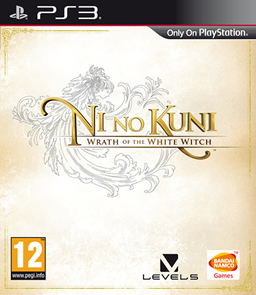
Review: Ni No Kuni

Ever since I heard Level 5 and Studio Ghibli were teaming up to make a game, Ni no Kuni, I got ready to dust off my PS3 and spend a good 60-80 hours in an incredibly beautiful world with plenty of quests, monsters, and adventure.  I even got the Wizard's Edition that came with (among other things) a physical version of the Wizard's Companion found in the game and a Wizard's coin.  The game certainly did not disappoint.  As expected, the art of the game is beautiful - some cutscenes are hand drawn like any other Studio Ghibli movie, while most of them are in the cel shaded style of the gameplay.  I will admit it would have been nice to have more hand drawn cutscenes, but that's probably because I want to watch another Miyazaki movie.

Gameplay-wise, there is plenty to do just like every other Level 5 game.  If you focus on just the story, you may be introduced to all the types of optional aspects of the game after 5-10 hours.  Between helping people on random errands, hunting bounties, capturing, training, and metamorphing familiars, crafting items with alchemy, finding hidden treasure chests, and competing in a tournament, there is certainly a lot to keep you occupied.  Fortunately, the game does a good job of helping you keep track of these things.  People with errands or things to offer you highlight on the map.  Your journal is very clear about where to go next for every side quest.  Your Creature Compendium lets you know what familiars are in what habitat (once you've fought them there), so it's easy to tell if you've caught all the familiars in a given place.  There is also a progress report on most tasks to tell you how far through you are.

The game is not without its flaws, though.  During your adventure, you will find other companions to travel and fight with you.  Each person has three familiars to choose from at any time, but for some reason the other AI players never use all of their familiars.  They also have a tendency to charge enemies with the familiars that are weak but strong with magic and use up all their mana by obliterating weak enemies with their most powerful spells.  Sometimes I just could not understand why my teammates were as stupid as they were.  Also, anytime anyone casts a spell that affects multiple targets (or a lot of times when I told my familiar to cast anything), it interrupts every spell your team is casting.  So if you're trying to heal your nearly dead teammate and they decide to cast a mass target spell, chances are good they're going to die by the time you manage to pull that heal spell off.  Also, my previous post about Instant Death was caused mostly due to this game.  Not only do random normal enemies have instant death abilities (a lot of them in the last few areas of the game), but apparently some of them have that ability in a tournament where you're not allowed to use items.  Since items are the only way to bring people back from the dead, that means there's a chance that you could instantly get killed in a tournament with no way to defend yourself.   Other than that tournament example, though, it's not so bad because if you survive the combat, any previously dead teammates will be alive with 1 hit point so you can just revive them again.

Wednesday, January 23, 2013

Cartoons I Grew Up On: The Mysterious Cities of Gold

I want to say the series, The Mysterious Cities of Gold, was my introduction into a show having continuity.  Unfortunately, I would miss episodes here and there, which made things a little confusing, so I wasn't able to watch the whole thing until a few years ago.

The show takes place in 1532 and revolves around a young Spanish orphan, Esteban, who is searching for his father while navigating for a mysterious man named Mendoza in his search for the Cities of Gold in the New World.  During their entire search, the crew is constantly hounded by other people also hunting for the cities of gold, including the commander of the Spanish forces, Gomez.  The closer they get to achieve their goal, the more they realize there is more to finding the mysterious cities of gold than just becoming wealthy beyond imagination.

This has some very minor similarities to Avatar the Last Airbender.  They both aired in the States on Nickelodeon, they both focus on three children (two boys and a girl), they both deal with the fantastic (although Avatar is admittedly way more fantastic than this is), and they are both animes (although this is also made by the French).  It definitely is a cheesy show (it is a kid's show after all), but it has some very interesting concepts in it that are worth watching.  It's only 39 episodes, so not that long of a series to go through.

Wednesday, December 19, 2012

Anime I Grew Up On: Flying Castle Laputa

In the States, this film is known as Castle in the Sky and Wiki says its Japanese name is Laputa: Castle in the Sky, but I swear I remember this being named Flying Castle Laputa, so that's what I always call it. Even if I'm horribly wrong because my memory is really terrible.

Castle in the Sky is (like most Miyazaki films) about two kids going on a fantastical adventure.  This particular one it involves airships, air pirates, and flying castles.  Really, that should be all that's necessary to convince you to watch this: Miyazaki and airships.

This movie is a big part of my childhood because not only did my brother, Adam, let me sit and watch it with him and his friends (being the annoying youngest brother, this was a big deal), but also it was the very first anime I ever watched.  So, I was especially surprised when many years later, my nieces had a DVD with them from Disney called Castle in the Sky and that it was one of their favorite movies.  Clearly, I don't have to worry about how my brother, Jason, is raising those kids.  Also, this was another thing that makes me really appreciate Disney and am fine with them buying up Marvel and LucasArts.  I would argue that Miyazaki films are the best way to get a non-anime watcher into watching anime.  Especially since if you watch them in English, they all have really good voice actors (this one in particular has Anna Paquin and Mark Hamill among many others).  They are all fairly light-hearted, are generally missing the more embarrassing anime stereotypes, and take place in very unique and fantastic settings that vary wildly from each other.

Wednesday, October 17, 2012

Suspension of Disbelief

The crux of any story in any non-modern, real world setting, is suspension of disbelief.  If there is anything at all that isn't exactly how it is in real life, then at some point the viewer/reader/gamer needs to accept that that is the way that works in your world and things will continue to operate within the bounds set unless given some explanation to cause an exception.  If these bounds are ever broken with no explanation, then the viewer/reader/gamer's suspension of disbelief will be broken, the illusion will be shattered, and your content will be seen as the ridiculous nonsense that it is (or maybe I'm just really harsh about my SoD being broken...).

One example of where my SoD has been broken recently is the new J.J. Abrams show, The Revolution.  The premise is that for some reason unknown to everyone, all power has gone out in the world and no one can generate more.  That's pretty fantastical and unrealistic, so it gives the show fairly large bounds within which they can set up the world 15 years later.  I'm fine with not knowing why there's no power, I accept that as a fact, so it would make sense that the ability to manufacture much of what we have today would be difficult or impossible.  My suspension of disbelief is broken when some of the militia has working civil war-era musket ball style guns.  They would have had to manufacture those guns somehow, which begs the question what happened to all the other guns in the world?  Did they stop working?  Are modern bullets really THAT hard to make without electricity?  You still have fire, metal, and gunpowder...do I just not know how bullets are made?  Even if you accept that, I guarantee there will be some technological dissonance for every person.  Some technology that can still function or be adapted with modern knowledge.  It's not like humanity got stupider, just we have no access to electricity.  So in 15 years no one was able to adapt any of our current technology to a powerless world?

Another example is the movie Inception.  In the very beginning of the movie, Leonardo Decaprio explains the rules of the dream world to Ellen Page.  He has set in stone the bounds of the world, so I know what to expect.  Problem is that those rules are very quickly broken and tossed out.  So the world does not work at all how I was told it would, so my SoD is broken.  If they had said that they think the dream world works a certain way and it didn't, then I could have accepted that no one had dove that many layers down (which they established) so the rules changed from what was known.  However, they were very adamant that the world did work that way, so what am I supposed to think when it doesn't work the way it should?

One last example is the anime Samurai 7.  I touched on this in my review, but let me go into more detail.  Throughout the show, it was shown that the seven main Samurai could perform fairly ridiculous feats defying normal laws of physics (swords that could cut through buildings, being able to jump giant robots in a single bound, being able to catch arrows, slice bullets/missiles in half, etc.).  They were very consistent with these rules, so I gladly accepted them as how this world worked.   However, in the final two episodes, they were suddenly able to perform feats that made me wonder how the leader samurai had never won a war (as he claimed).  The engineer samurai converted one of the robot samurai's limbs into a flying ship (sure whatever, ridiculous, but I'll accept it).  The capital ship they are attacking shoots a giant laser beam at them through their own arm.  The enemy robots all blow up in this beam, but somehow this robot limb the samurai are flying can ride on top of the laser beam like a surfboard.  Ummm....what?  It's as if they project an aura of samurai-ness to whatever they touch.  Too ridiculous for me.

Wednesday, September 26, 2012

Review: Samurai 7

Samurai 7 is an anime based off of Akira Kurosawa where a village being tormented by bandits hires a group of seven samurai to defend it.  The group of samurai is a very diverse group made of a Mechanical Samurai, the new kid, a guy who reminds me eerily of Spike from Cowboy Bebop, the experienced samurai who has always been on the losing side, etc.

The first half of the series is all about recruiting the samurai and their travels to the village.  In typical anime style, they can't just have people fighting people, so instead the bandits are samurai that have turned themselves into giant robots.  Throughout the series there's an anime level of physics (e.g. the experienced samurai are able to slice through giant robots and buildings alike with a single stroke), but the last two episodes take it to an even more ludicrous level that goes way past my ability to suspend disbelief.  Samurai were deflecting some lasers with their swords, while riding others like a wave.  Up until that point, I was a big fan of the series.  I have a fondness for the eclectic diverse team.  I love samurai and the ridiculousness of a typical samurai showdown.  But the final battle that should have been epic was instead just inane.  But I guess a great series that ends badly isn't unheard of in anime.

With the show only being 26 episodes, I think it's worth a watch if you enjoyed Seven Samurai or Magnificent Seven (since that's also based on Seven Samurai).  Maybe just stop on episode 24 and let your imagination end the series for you, it'll probably be more consistent.

Friday, August 3, 2012

Grudges and Archenemies

If you have never seen the cartoon Gargoyles, I would highly recommend you watch it (even if you're an adult).  Not only is it made by some pretty amazing people, but it has incredibly well done continuity and character building.  One of the aspects I loved the most is that each one of the main gargoyles had a grudge against a different one of their villains that persisted throughout the show and heavily influenced their interactions with those characters.  Goliath and Xanatos, Brooklyn and Demona, Lexington and The Pack, Broadway and criminals with guns, and Hudson and the Archmage.  Any time one of these villains showed up, the appropriate gargoyle would start acting very different.  Goliath was always quick to mistrust David Xanatos.  Lexington was always eager to go out and fight if The Pack was involved.  Broadway would go in a rage to destroy the firearms because of a bad experience he had with one in the past.  These recurring attitudes really helped to give a strong depth to the gargoyle's characters because you would slowly see them overcome the grudge to win the day.  Goliath kept being forced to team up with Xanatos.  Lexington kept getting caught when he stupidly rushed out to fight The Pack, so he eventually learned to fight smarter (which made sense since he was the smartest of the gargoyles).

Star Trek: The Next Generation had a similar thing going on, but not so tangible.  Almost every time a character had an episode revolve around them, they would have to struggle with the same issue.  Geordi would time and again have episodes about bad relationships.  Riker kept dealing with problems caused by his career (either focusing too much on it in his past or refusing to advance to Captain).  Crusher dealt with being alone.  Picard kept dealing with opening up and not being such a stoic Captain.


I want to say I'm just illustrating some examples of a foil, but with Star Trek, they were situations and not characters and with Gargoyles, they weren't the opposite of the character, they were just an archenemy developed from the gargoyle's first experience with them.  I guess this is much harder to do if your story just has a single protagonist since he'll just seem really bitter if he has a strong grudge against all of his villains.

Friday, July 27, 2012

Review: Kenichi - The Mightiest Disciple

From childhood, Kenichi Shirahama has had a very strong sense of justice.  One day while walking home from school, he sees a bunch of street thugs threatening a beautiful girl, so he decides to rush in and save her.  Unfortunately, he has no idea what he's doing, so the thugs make fun of him and push him away.  As they are about to beat him up for being a hero, the girl takes off her glasses and gracefully kicks the stuffing out of  the thugs.

It turns out the girl, Miu Furinji, was raised at a martial arts dojo with her grandfather and 5 other masters of various martial arts.  After finding out Kenichi is merely getting picked on in the school's karate club instead of trained, Miu offers to bring him to her dojo so the masters can train him.  Hilarity ensues as the masters train Kenichi using methods that seem very much like torture.  (It's funnier than it sounds, I promise).  The rest of the series follows him as he continues to train to be the best, while fighting off a local gang, Ragnarok, who want to at first recruit him and then destroy him as he continues to grow in strength.


Much like Naruto, Bleach, or DBZ, this show is mostly about fighting and getting stronger.  One big difference is that unlike everyone on the other shows, Kenichi has absolutely no talent.  His enemies tell him, his masters tell him, and I'm pretty sure he tells himself that constantly, too.  But what he does have is a lot of perseverance and hard work.  I think that makes it that much more awesome when Kenichi gets serious, uses a new technique he learned and defeats someone who would have destroyed him one episode before.  Another nice difference from the other fighting animes is that Kenichi learns actual martial arts moves and with quite a bit of detail and explanation, so it's possible you might be able to learn or at least understand the moves yourself.  Even if you don't, a lot of the first season adds little history lessons with his training.  I'm not sure how accurate these lessons are, but it makes me want to learn more, which is pretty impressive.

The other awesome part of the show are the masters themselves.  They have the feel of old kung fu movie masters with lots of wonderful cliches: everything is a lesson or training, the aforementioned torture-like training methods, the pervy master, the drunk master, the wise and sensible master, etc.  And by far the best of the whole lot is the Muay Thai master, Apachai.

To make up for the awesomeness of the masters, I guess the show needed an annoying character that I kept wishing would just go away and that comes in the form of Kenichi's "friend", Niijima, who (along with the Masters) is really the only truly unrealistic character.  The first time I watched the series, I remembered them joking about Niijima being an alien, but thought no one seriously thought that, but watching it again, I'm pretty sure Niijima is just an unexplained random demon or alien or something.

Overall, I feel the show is worth watching if you're a fan of any of the previously mentioned anime series or just like to see a really talentless and weak character grow in skills, confidence, and knowledge to be something so much more awesome.

Monday, May 21, 2012

Review: Baccano

The closest thing I can equate Baccano to is Lost because both of them would raise more questions every time previous questions got resolved.

Baccano is a 16 episode anime about the lives of numerous people in 1930s (mostly) and how they intertwined during a train ride on the Flying Pussyfoot.  Some are on the train to hold a Senator's wife and daughter hostage, some are there to kill people in the dining car for some great sacrifice, some are there to rob it, and there's the Rail Tracer who just seems to be out to murder everyone on board.  Oh and I guess I should mention that many of the characters are immortal.

Baccano had me hooked from the opening theme song (most of my favorite animes have amazing music, I'm not sure if there is a correlation or if there is, which way it goes).  This is one of the few times I had to watch the opening theme for many episodes because it shows most of the characters names and it was a good way to try to keep track of things early on.  That's really the only downside to this anime, you really have to pay attention.  There are so many characters and the story takes place in four separate times (1711, 1930, 1931, and 1932) and it starts to jump back and forth pretty freely between each one of those.  So it can be very tough to keep things straight.

All of that doesn't matter, though, because of Isaac and Miria.  I promise you, that you will be cracking up every single time they are on the screen.  These two, I think, are trying to be Robin Hood-esque thieves to try to atone for their previous robberies that weren't so good.  They're usually hindered by the fact that their logic is less logical than even mine can be:
"We once tried to steal an entire museum as well."
—Isaac to Miria
"That proved impossible though."
—Miria to Isaac
"Yes! So at least, in order to make it impossible for people to enter, we stole the entrance [door]!"
—Isaac to Miria
"It sure was heavy!"
—Miria to Isaac