I think I've said before that I get hooked to reality competition shows pretty easily. Even when they're pretty bad. So I guess it shouldn't surprise me that I keep finding myself watching Hell's Kitchen even though that show is not at all about the cooking or the competition, but purely about the drama, yelling, and cursing. Supposedly, the earlier seasons were the reverse, but I haven't seen them to be able to tell.
Then when MasterChef came out a few years ago, I watched that and was pleasantly surprised that there was a severe lack of cursing and it actually seemed to be about the cooking and the competition. Sadly, the more seasons the show has, the more it seems to be about the drama, so it's only a matter of time before it becomes as ridiculous as Hell's Kitchen.
When I started watching Netflix, one of the shows I watched on it was Kitchen Nightmares (the UK version). Much like MasterChef, there wasn't nearly as much yelling and screaming as I expected and it honestly seemed to be about Gordon Ramsay actually helping people make their restaurants work again. Sometimes, the owners would be stubborn (which always makes me wonder why they signed up to be on the show in the first place) and kind of warrant being yelled at. But even the yelling was toned down and more normal than what happens on Hell's Kitchen. I do believe that the American version isn't nearly as nice and involves much more yelling.
So it seems that eventually all Gordon Ramsay shows turn into yelling drama shows no matter how they start. I'm not sure if this is Gordon Ramsay's doing, Fox's doing, or what, but it makes me kind of sad because all three of these shows started with interesting premises. Hell's Kitchen is a competition to find a head chef by making cooks alternate between cooking individual dishes in challenges and serving meals to customers as a team for elimination. MasterChef is essentially Top Chef, but with home chefs (i.e. not professionals) instead of real chefs. Kitchen Nightmares is about trying to help a restaurant owner and their employees to figure out why their restaurant is failing and fix it. I'll probably keep watching these shows and other Gordon Ramsay shows, but I really do wish they'd focus more on what made the shows good initially rather than making every show a screaming match.
Friday, August 30, 2013

Wednesday, August 28, 2013
TV Shows I Grew Up On: Cartoon Planet

The CDs were made up of audio versions of a lot of the songs and skits they would perform between cartoons. These included songs like Brak wondering what day it is or how much he loves beans. It's really hard to explain how awesome these songs and skits were (for the most part) because they all sound so stupid, but I think that's mostly what makes them so good. It seems like the three voices behind the characters were just making stuff up and having fun with being ridiculous. It's kind of like a comedy movie with a bunch of actors good at improv just having a good time. Or, like the mind of Neil Flynn.
Monday, August 26, 2013
Review: Mario & Luigi: Dream Team
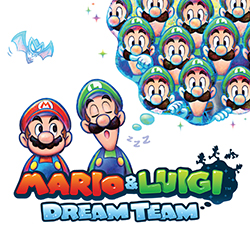
This is a fairly long game. Even though, I try to do everything in a game, I've always been fairly speedy at beating games and this took me a little less than 50 hours to beat. There's quite a lot to do and nearly all of it is quite enjoyable. Just like in Super Mario RPG, combat is a turn based system where correctly timed button presses can deal extra damage or avoid damage. Unlike Super Mario RPG, it's possible to completely avoid taking damage from enemy attacks and in most cases counterattack the enemy and deal damage to them instead during their attacks. The big difference between this game and other Mario & Luigi games is entering the Dream World through Luigi's dreams. In the overworld, Mario and Luigi are separate characters, Mario controlled with A and Luigi with B. In the Dream World, Dreamy Luigi combines with Mario to form one more powerful character. This is good since the enemies in the Dream World come in hordes of 10-20 at a time. It was actually pretty fun to have a mass of slightly weaker enemies to attack at once vs. the normal 3-5 enemies you normally face in these games.
Alongside the main quest, there are a plethora of side things to do. You can look for and rescue all the Pi'illo people that have been trapped throughout the island, you can find all the beans hidden in the ground throughout the island, you can replay harder versions of boss fights to try to win some coins, you can take on the expert challenges (generally just getting Excellent on attacks and avoiding all damage from enemies), and you can challenge yourself to a high score mode for the special attacks (basically repeat a special attack endlessly until you kill enough enemies or screw up performing the special attack). The item you get for completing all the expert challenges is well worth the time and effort it takes to get it, so I would recommend you try that, but the way the special attack challenges are done makes them not worth attempting. Each challenge requires you to get over 800 points even though some attacks are much slower or more challenging, so getting that score will take you much longer and many failed attempts. I personally did not find those fun in the slightest. Really my only complaint about the game.
Along with a leveling system that has the same choice and risk of Super Mario RPG (you get to pick the stat you're boosting, but you have a spinner deciding what you get), the game also has equipment that not only boosts your stats, but also gives you some interesting benefits, like doubling your defense when you have low health, possibly stunning enemies, or giving you back your Bros. Points (basically magic points, mana points, energy, etc. for using special attacks) if you score Excellent on the attack. By the end of the game I was just about invincible due to my combination of equipment. However, I still had to be fairly good at learning the enemy attacks so I could dodge them. So, I felt powerful, yet still challenged, which I think is how every good RPG should feel at the end.
So all in all, this is a quality game, very much worthy of following Super Mario RPG and trying to keep what that game did alive. I do still miss the hidden coin blocks in the overworld, but I guess I can't have everything...
Friday, August 23, 2013
Choosing Random vs. Random Choice
A game design issue that I've been working and struggling with at my job lately is the difference between choosing to take a gamble that involves some random chance in it vs. having some outcome of the game be randomly selected for you. The end result is going to be the same regardless of which way the game is designed, but it feels incredibly different from a player's point of view because in one case they get to choose to take a risk and in the other case, they have no choice and whether the end result is good or not, it doesn't feel as satisfying.
I'll give an example to make this a little clearer. In the game I'm currently working on, there's a lot of hidden information. So what information each player gets is very important and what they do with that information is the real crux of the game. In the original design, one player moved pawns around and each turn, had a random chance of seeing what the other player did at those spots. Having multiple pawns on the same spot would increase that random chance. So, the "interesting" choice they had was how to allot their resources and hope for the best. It turns out (unsurprisingly now that I look back at it) that this is really not fun to play.
The new design is to instead give the first player a bunch of false information along with information about what the other player is doing. They can't tell the difference between false and real information, so the choice is still seemingly random, but the player gets to choose which information they think is real. Eventually, the player should have enough information to start figuring out what the other player is doing and deduce their strategy and come up with a good counter strategy. This makes it so the interesting choice is how to deal with the information you have and not how to hopefully get the right information.
A similar example of random choice is battle in the game of Risk. You do get to choose where to attack, but the outcome is pretty much completely random, so even if your strategy is amazing or you have 99 times as many units as the other player, you can still lose because the dice hate you. It's still important for the defender to have some method of surviving an attack, but at some point, the better strategy should be rewarded over the luckier player. Of course, this is why the combat in my first board game took a long time to play because I eliminated random die rolling and had straight up math (attack vs. defense), which taught me a whole other lesson. Still a balance I have yet to completely figure out.
Wednesday, August 21, 2013
Games I Grew Up On: Drakkhen
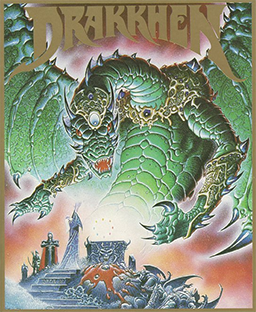
Traveling the overworld was along the XZ planes (no going up, only forward, backward, left, and right) and battles would take place in a brawler style view (you could travel around in all three dimensions in a fixed space). Battle consisted of your characters kind of randomly milling around enemies, occasionally attack enemies whenever they felt like it, with maybe some strategy that I couldn't really figure out.
You could equip your characters with armor and weapons you find (which changed character appearances). Generally, you'll find this equipment in the castles you can explore. Speaking of exploring, the game lets you explore pretty much wherever you want from the get go, so you can very quickly get overwhelmed by the giant black cat heads that shoot laser beams from their eyes or constellations that come down to destroy you. Like I said, a very weird game. It had a much more normal and super awesome sequel, Dragon View, that I was never able to finish because every ROM I found of it would freeze in the same spot. So basically, one series, two games, two games I was never able to beat. Sad day.
Monday, August 19, 2013
TableTop
It can be really overwhelming when staring at a wall of board games in a store and trying to figure out which ones are good. It can also be a very expensive mistake to buy a game you don't like. This is where web series like Wil Wheaton's TableTop come into play. Every episode is the same format: different B-list celebrities play a board game with Wil Wheaton, hilarity ensues, a winner is declared, the losers mope on the loser's couch, and the winner gives a little speech. It's very obvious that everyone involved has a lot of fun making this.
Watching the series is a great way to see how a game plays, how much story can be involved in a board game, and possibly find out about other celebrities you enjoy and should follow. Each episode is 30 minutes or so (except for the extended ones that are an hour and a half each). The first season is filled with games that all very shortly became available at Target (I'm not sure if they had a deal with Target or just good timing). Of course, I'm sure all these games are available on Amazon as well. Just keep in mind, I've noticed a number of times where they'll play the game slightly wrong. Either a rule gets ignored or played differently. I'm guessing this is to fit the format of the show or keep the game shorter. During the extended episodes, you can see how the behind the scenes people make sure they're playing the game right.
Watching the series is a great way to see how a game plays, how much story can be involved in a board game, and possibly find out about other celebrities you enjoy and should follow. Each episode is 30 minutes or so (except for the extended ones that are an hour and a half each). The first season is filled with games that all very shortly became available at Target (I'm not sure if they had a deal with Target or just good timing). Of course, I'm sure all these games are available on Amazon as well. Just keep in mind, I've noticed a number of times where they'll play the game slightly wrong. Either a rule gets ignored or played differently. I'm guessing this is to fit the format of the show or keep the game shorter. During the extended episodes, you can see how the behind the scenes people make sure they're playing the game right.
Friday, August 16, 2013
Adding Spice To A Game
The most important thing when designing a game is to keep it simple and build slowly. Start with the simplest possible set of rules, play it, if the game functions (and has a hint of fun), add or change one thing, repeat. That is called iteration. But how do you know what to add/change next? Well that kind of depends on the state of the game. If the game is horribly unbalanced, then focus on making the weaker player's game stronger (give them more advantages) or weakening the strong player (take away some of their advantage). If the game isn't fun, then figure out where the fun got lost or where you think the interesting choices should be found and focus on those. If the game is playing well, but it seems to be the same game for a player (that is, if there seems to be one optimal way to play the game), then it may be time to add another system or more options for the player to take. No matter what you're adding, the important things are to start with the simplest and easiest to implement changes first and to try to avoid making special case rules for any part of the game.
If you can try a change without having to get new pieces or change game components, those should take precedence. For example, changing balancing (e.g. how much damage something deals), changing what information each player has (e.g. whether cards are revealed at certain times or not), or changing game flow (e.g. players take turns simultaneously or alternately). You should always keep in mind what future complicated systems/variations you want to add to the game (if you have pawns, maybe you would want special types of pawns) and add those in one at a time when the game is in a stable(ish) state.
Special case rules should be avoided in game design for the same reason that quick hack fixes should be avoided in programming. Sure, you may fix that one weird case your playtesters found, but not only is that fix going to be hard to communicate to your players, but what if you missed other weird cases? It's far better to try to figure out the root cause of the problem and simplify things where you can or maybe completely change how one part of your game works. It's almost always better to simplify things to fix a problem than to add more systems to fix it. As much as it may hurt sometimes, never be afraid to oversimplify things.
If you can try a change without having to get new pieces or change game components, those should take precedence. For example, changing balancing (e.g. how much damage something deals), changing what information each player has (e.g. whether cards are revealed at certain times or not), or changing game flow (e.g. players take turns simultaneously or alternately). You should always keep in mind what future complicated systems/variations you want to add to the game (if you have pawns, maybe you would want special types of pawns) and add those in one at a time when the game is in a stable(ish) state.
Special case rules should be avoided in game design for the same reason that quick hack fixes should be avoided in programming. Sure, you may fix that one weird case your playtesters found, but not only is that fix going to be hard to communicate to your players, but what if you missed other weird cases? It's far better to try to figure out the root cause of the problem and simplify things where you can or maybe completely change how one part of your game works. It's almost always better to simplify things to fix a problem than to add more systems to fix it. As much as it may hurt sometimes, never be afraid to oversimplify things.
Subscribe to:
Comments (Atom)